Gen X Would Like a Word
Posted on:
September 24, 2026
Generation X has spent most of its life wedged between two louder generations.
First, baby boomers dominated the national conversation for decades. Then, millennials inspired seemingly endless analysis. Now, Gen Z has arrived with TikTok, new workplace expectations and an impressive ability to make the rest of us feel really old.
Gen X has largely carried on.
Now between the ages of 45 and61, its members are leading businesses, supporting children, caring for aging parents and wondering whether retirement will happen on schedule. They are also increasingly uneasy about the future.
Axios recently reported that GenX has the lowest consumer confidence of any generation. The Conference Board's Consumer Confidence Index for the group fell to 78.4, below baby boomers and significantly behind younger generations.
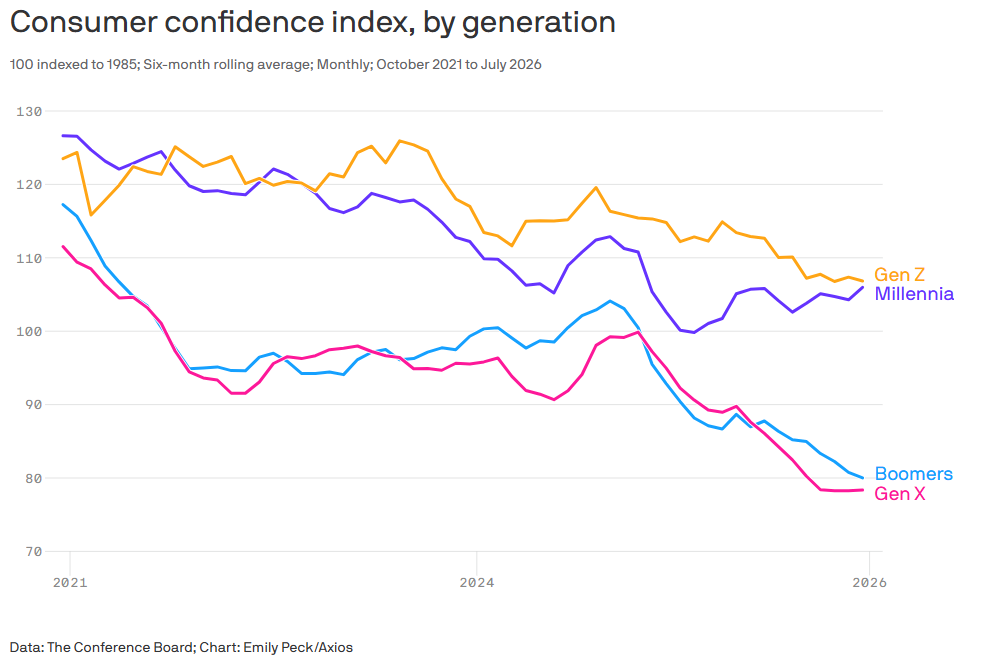
For a group that controls a substantial share of household spending and occupies many leadership positions, that loss of confidence matters. The forgotten generation is carrying a lot and wondering how much longer the math will work.
Welcome to the Middle
There is a reason Gen X is known as the sandwich generation.
Many are helping children establish independent lives in an expensive economy while aging parents need financial support, medical care or help managing daily life. Everyone needs something, and Gen X is somewhere in the middle trying to remember which password works for the Netflix account.
Retirement is also close enough to feel real. After decades of working, saving and weathering economic disruptions, many Gen Xers are questioning whether they are prepared for what comes next.
These are peak earning years and peak responsibility years. Confidence reflects whether people believe their income, employment and financial plans can carry them into the future.
For Gen X, the future has arrived with a fairly large bill attached.
The Forgotten Generation Remembers
Gen X has lived through enough economic disruption to understand how quickly conditions can change. Its members also remember what things used to cost. Now every trip to the store is an opportunity to feel personally offended by the price of cereal.
That longer frame of reference shapes how people interpret the economy. A person can be employed and pay the bills while feeling less confident as those bills consume more of the household budget. Stability can look solid on paper and feel fragile in everyday life.
Economic uncertainty influences when someone can retire, whether they can help a child buy a home, how they will care for a parent and what financial cushion will remain afterward.
Today's costs are shaping tomorrow's choices.
The Gulf South Is Feeling the Pressure
The 2025 Gulf South Index Report found that forty-two percent of Gulf South respondents felt times were tough and said they were just trying to pay their bills, compared with 33%nationally. Another 44% said they were financially worse off than they had been two years earlier.
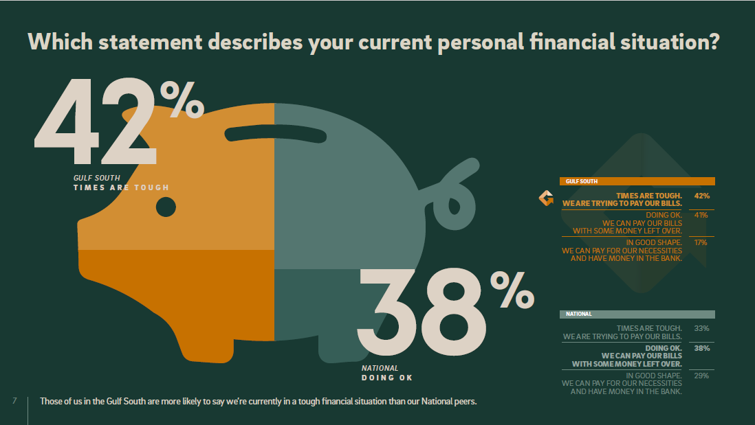
Those numbers reflect daily household calculations. Can we replace the car this year? Can we help a parent and keep our own plans on track? Can we retire when we planned?
People experience the economy at the grocery store, in their insurance renewal and around the kitchen table. When those numbers stop adding up, confidence follows.
Peak Earnings, Peak Pressure
A 2025 Circana report on generational spending adds another layer to the picture. Gen X represents 19% of the U.S. population but controls 33% of total retail spending, the largest share of any generation.
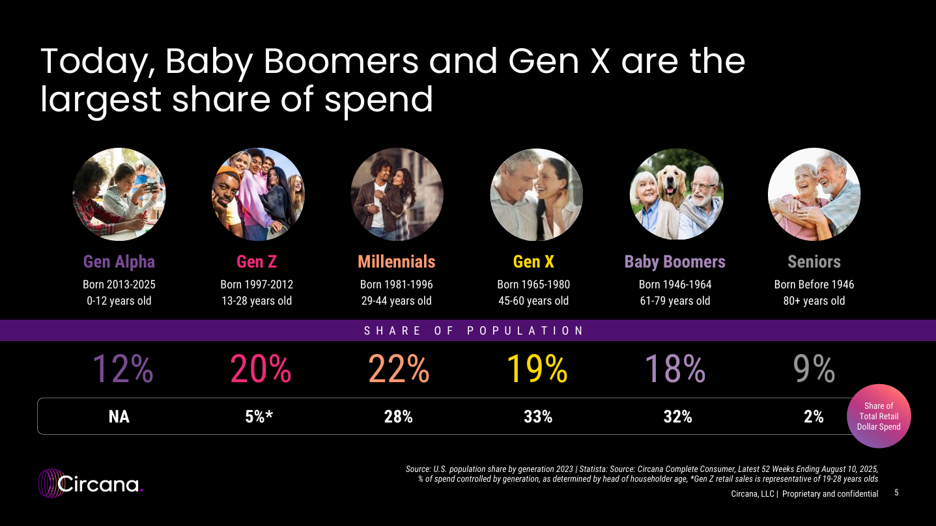
It makes sense. Gen X is in its peak earning years, and many of its members are making major financial decisions for several people at once. They are paying mortgages, supporting children, caring for parents, maintaining households and preparing for retirement. A large share of the country's spending passes through their hands because a large share of the country's responsibilities does too.
Yet the same report found that 62% of Gen X workers were still recovering financially from the pandemic. Buying power and breathing room are two very different things.
That helps explain why low confidence can exist alongside high spending. Much of that spending reflects responsibility instead of comfort. The bills keep coming, the car eventually needs to be replaced and everyone in the family still expects to eat. Gen X can keep the household moving while feeling increasingly cautious about what comes next.
A Generation That Does Its Homework
Gen X is often described as independent and pragmatic, and they are frequently underestimated. These traits also appear in the way the generation makes decisions.
Fifty-five percent of Gen Xers research products before buying, more than younger shoppers. More than half would rather pay more for a brand they know than take a chance on a cheaper option. They prioritize price and practicality over flashy trends or influencer recommendations.
That behavior reflects a generation trying to create certainty wherever it can. When the broader economy feels unpredictable, research offers a measure of control. Familiar brands reduce risk. Practical purchases help stretch money further. Loyalty grows from experience and from knowing which products, companies and people have delivered before.
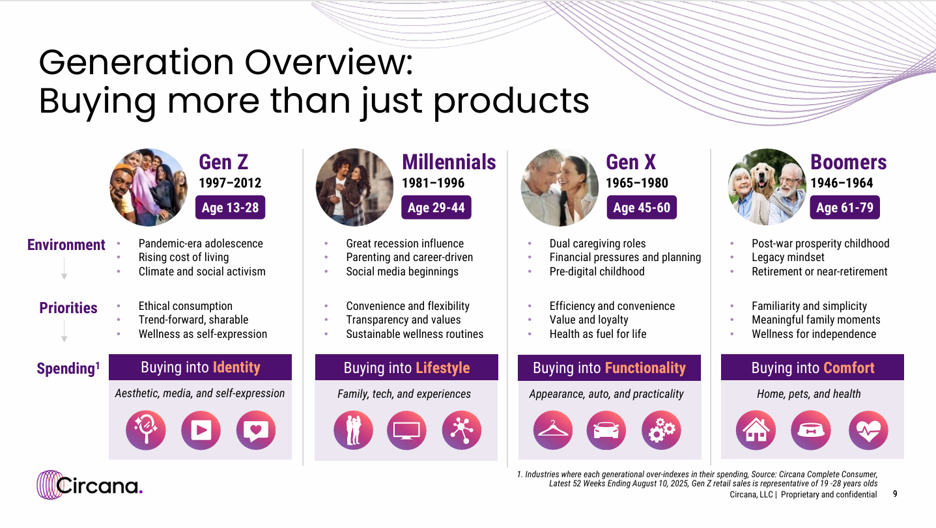
For organizations trying to understand this generation, confidence will come from clarity, usefulness and proof. Gen X wants the details, the value and a reason to believe the promise will hold up in real life. After everything this generation has carried, trust has to earn its place in the budget.
***
Low confidence among Gen X matters because its members run organizations, manage employees, support families, care for relatives and direct a significant share of household spending. Their confidence influences spending, hiring, investing, retirement and community involvement.
Gen X is confronting a widening gap between responsibility and confidence. Its members may be in their highest-earning years, but they are also supporting multiple generations while preparing for their own futures.
Gen X keeps showing up, working, providing and planning. The forgotten generation is reminding us that resilience can carry a heavy load, even when reassurance is in short supply.
Stay Ahead of What's Moving
Understanding this region takes time, attention and perspective. Let us help you navigate uncertainty and take action.